

1
/
von
1
Soft Electronics for Diagnosis, Therapy, and Integrated Systems (Xinge Yu)
Soft Electronics for Diagnosis, Therapy, and Integrated Systems (Xinge Yu)
Normaler Preis
CHF 169.60
Normaler Preis
Verkaufspreis
CHF 169.60
Inkl. MwSt.
Versand wird bei Kasse berechnet
In 1–2 Tagen versandfertig
Anzahl
Verfügbarkeit für Abholungen konnte nicht geladen werden
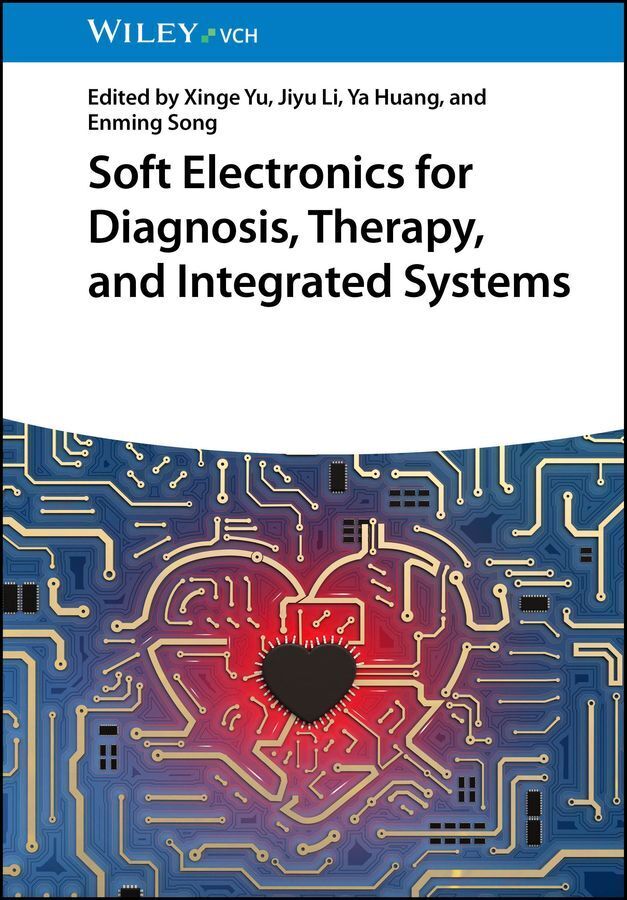
Overview of cutting-edge soft electronics technologies and their clinical and biomedical applications in fields including bioimaging and drug delivery
Soft Electronics for Diagnosis, Therapy, and Integrated Systems summarizes soft bio-integrated electronics in three parts: soft sensors for diagnosis, soft electronics for therapy, and soft systems for interaction, reviewing the latest state-of-the-art research and comprehensively covering topics from device design strategies and materials processing methods to fabrication techniques and electrical measurements.
This book provides information on a wide variety of applications, including flexible sensors for disease diagnosis, flexible electrode for noninvasive brain-computer interface, invasive electrodes, mechanical sensors (transducers) for motion detection of human and organs, smart optoelectronics in health monitoring and human machine interactions, non-invasive detection of bio-analytes, biosensors for blood microbe and virus diagnosis, sensors for bioimaging, self-powered sensors, electrical stimulation, phototherapy, drug delivery, thermotherapy, feedback technology, and soft robots.
Written by a team of highly qualified authors and contributed to by experts in their respective fields, Soft Electronics for Diagnosis, Therapy, and Integrated Systems discusses sample topics such as:
* Island bridge structure-curved lines in flexible sensor mechanics, covering 2D and 3D spiral interconnects as well as 2D fractal structures
* Ocular wearable sensors, covering contact lens sensors, capsule-based tear sensors, wearable eyepatches, and eyeglass sensors
* Materials and structures of soft sensors, covering nanomaterials, liquid conductors, elastomers, hydrogels, and textiles, as well as serpentine, mesh, and coiled structures
* Fundamentals of photodetectors, covering performance parameters, quantum dots, and perovskites and other organic materials
Describing both theory and application, Soft Electronics for Diagnosis, Therapy, and Integrated Systems is an excellent and up-to-date reference on the subject for materials scientists, electronics engineers, biotechnologists, and developers and other professionals in the sensor industry.
Soft Electronics for Diagnosis, Therapy, and Integrated Systems summarizes soft bio-integrated electronics in three parts: soft sensors for diagnosis, soft electronics for therapy, and soft systems for interaction, reviewing the latest state-of-the-art research and comprehensively covering topics from device design strategies and materials processing methods to fabrication techniques and electrical measurements.
This book provides information on a wide variety of applications, including flexible sensors for disease diagnosis, flexible electrode for noninvasive brain-computer interface, invasive electrodes, mechanical sensors (transducers) for motion detection of human and organs, smart optoelectronics in health monitoring and human machine interactions, non-invasive detection of bio-analytes, biosensors for blood microbe and virus diagnosis, sensors for bioimaging, self-powered sensors, electrical stimulation, phototherapy, drug delivery, thermotherapy, feedback technology, and soft robots.
Written by a team of highly qualified authors and contributed to by experts in their respective fields, Soft Electronics for Diagnosis, Therapy, and Integrated Systems discusses sample topics such as:
* Island bridge structure-curved lines in flexible sensor mechanics, covering 2D and 3D spiral interconnects as well as 2D fractal structures
* Ocular wearable sensors, covering contact lens sensors, capsule-based tear sensors, wearable eyepatches, and eyeglass sensors
* Materials and structures of soft sensors, covering nanomaterials, liquid conductors, elastomers, hydrogels, and textiles, as well as serpentine, mesh, and coiled structures
* Fundamentals of photodetectors, covering performance parameters, quantum dots, and perovskites and other organic materials
Describing both theory and application, Soft Electronics for Diagnosis, Therapy, and Integrated Systems is an excellent and up-to-date reference on the subject for materials scientists, electronics engineers, biotechnologists, and developers and other professionals in the sensor industry.
Autorenportrait
Prof. Xinge Yu is an Associate Professor in the Department of Biomedical Engineering at the City University of Hong Kong. He received his B.S. in engineering and technology in optoelectronics from the University of Electronic Science and Technology of China (UESTC) in 2009. He finished his Ph.D. research in solution process/printable flexible electronics at Northwestern University under the supervision of Prof. Tobin J. Marks and Prof. Antonio Facchetti, and recived his Ph.D. degree in Optical Engineering from UESTC in 2015. From 2015 to 2018, Xinge Yu was a postdoctoral research associate in the Center for Bio-Integrated Electronics at Northwestern University and an adjunct research assistant professor in the Department of Materials Science and Engineering at the University of Illinois at Urbana-Champaign, where he was working on novel flexible and bio-electronics with Professor John A. Rogers.
Jiyu Li, Postdoctoral fellow, Department of Biomedical Engineering, City University of Hong Kong.
Ya HUANG, Postdoctoral fellow, Department of Biomedical Engineering, City University of Hong Kong.
Enming Song received the B.S. degree from Department of Materials Science, Fudan University, Shanghai, China, in 2011, where he has been pursuing the Ph.D. degree with the Department of Materials Science since 2011. He currently focuses on developing novel materials, devices as chronic bio-implants and of relevance semiconductor processing technologies. His current research interests include the fields of materials science, bio-electronics, and nano-electronics.
Jiyu Li, Postdoctoral fellow, Department of Biomedical Engineering, City University of Hong Kong.
Ya HUANG, Postdoctoral fellow, Department of Biomedical Engineering, City University of Hong Kong.
Enming Song received the B.S. degree from Department of Materials Science, Fudan University, Shanghai, China, in 2011, where he has been pursuing the Ph.D. degree with the Department of Materials Science since 2011. He currently focuses on developing novel materials, devices as chronic bio-implants and of relevance semiconductor processing technologies. His current research interests include the fields of materials science, bio-electronics, and nano-electronics.
Weitere Angaben
Buch (Hardcover), Englisch, 496 Seiten
Jetzt Liquidations-News abonnieren
Immer die neusten Abverkäufe und Räumungen kennen! (Max. 1 Nachricht / Monat)