

Spatialities of Displacement in Times of Climate Change (Francesca Ceola)
Spatialities of Displacement in Times of Climate Change (Francesca Ceola)
In 1–2 Tagen versandfertig
Verfügbarkeit für Abholungen konnte nicht geladen werden
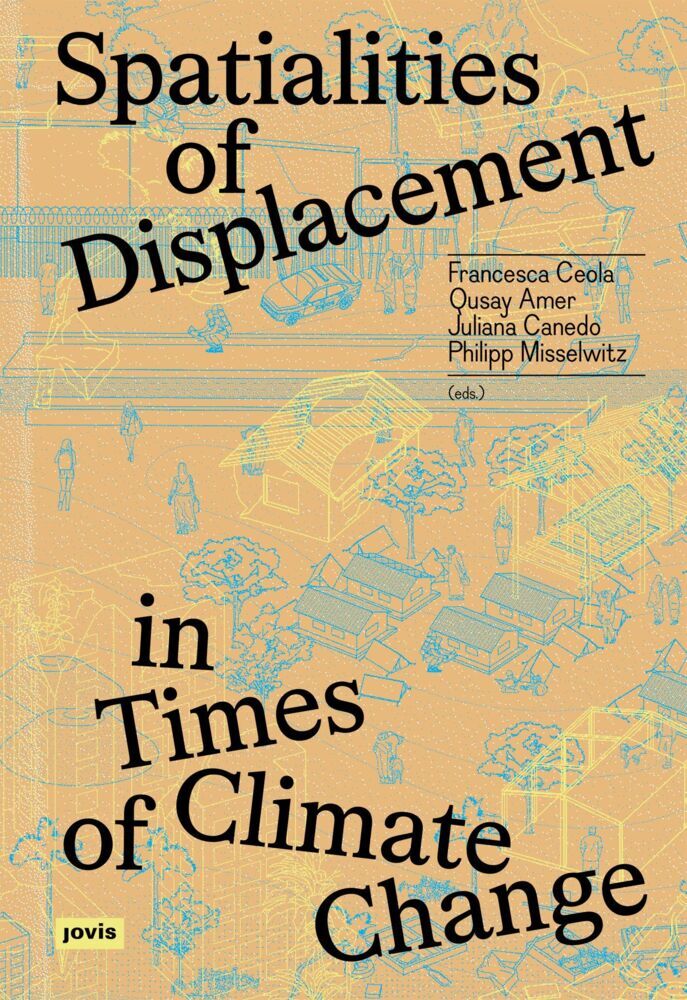
From the US-Mexico border to coastal Colombia, from Brazil to Bangladesh, scholarship on displacement and climate has grown in recent years, reframing climate change not as the sole driver of migration but as part of a complex matrix of economic, social, and political forces. Against this backdrop, this book addresses the climate-space-displacement nexus by foregrounding spatial imaginaries that inspire hopeful futures. Bringing together interdisciplinary contributions from geography, planning, anthropology, sociology, and architecture, it explores resistant and emerging spatialities of displacement. Structured around three sections-Shifting Grounds, Erratic Waters, and Lines of Flight-the volume suggests a shift in emphasis to seriously consider how individual and collective human agency necessarily entangles with ecological and geophysical forces. It engages with the appropriation and signification practices engendered by displaced subjects in shaping social and physical landscapes after the disappearance of their environments or in the generation of new situated ones.
With contributions by Ignacio Farías, Silke Steets, Efadul Huq, Faranak Miraftab, Hannah Sender, Hanna Baumann, Joana Dabaj, Irina Rafliana, Lou Elena Bouey, Irit Katz, Ali Yahya, Florian Bonnefoi, Mennatallah Hamdy, Ayham Dalal, Enrique Coraza de los Santos, Catalina Elvira Espinosa Vega, Omar Galán, Maren Larsen, Austin Zeiderman, Mari Paz Agúndez, Ana Cláudia Cardoso, Carlos Tukano, Francesca Ceola, Qusay Amer, Juliana Canedo and Pablo Quiroga Devia.
Autorenportrait
Francesca Ceola is a geographer and PhD candidate at CRC1265 and Habitat Unit. Her research practice interweaves forced displacement studies, counter mapping, urban socio-political ecologies, and shifting landscapes.
Qusay Amer is an architect and PhD candidate at CRC1265 and Habitat Unit, TU Berlin. His research explores how migration, refugee agency, and translocal governance shape space. His teaching focuses on collaborative architectural and urban interventions, insurgent urbanism, and the right to the city.
Juliana Canedo is an architect, urbanist and senior lecturer and researcher at Habitat Unit. Her research focuses on collaborative design with communities in self-built spaces, conceptually she works with notions of insurgent urbanism and the right to the city.
Philipp Misselwitz is an architect and urban planner working in international development, is a Full Professor and Chair of Habitat Unit. He acts as Principal Investigator in the research project "Architectures of Asylum" (CRC1265). He is Executive Director of Bauhaus Earth.
Weitere Angaben
Jetzt Liquidations-News abonnieren
Immer die neusten Abverkäufe und Räumungen kennen! (Max. 1 Nachricht / Monat)