

1
/
von
1
Targeting Protein-Protein Interactions for Drug Discovery (Jian Zhang)
Targeting Protein-Protein Interactions for Drug Discovery (Jian Zhang)
Normaler Preis
CHF 149.50
Normaler Preis
Verkaufspreis
CHF 149.50
Inkl. MwSt.
Versand wird bei Kasse berechnet
In 1–2 Tagen versandfertig
Anzahl
Verfügbarkeit für Abholungen konnte nicht geladen werden
Up-to-date reference surveying the latest advances in the structural understanding of protein-protein interactions and developments in drug discovery and therapeutics
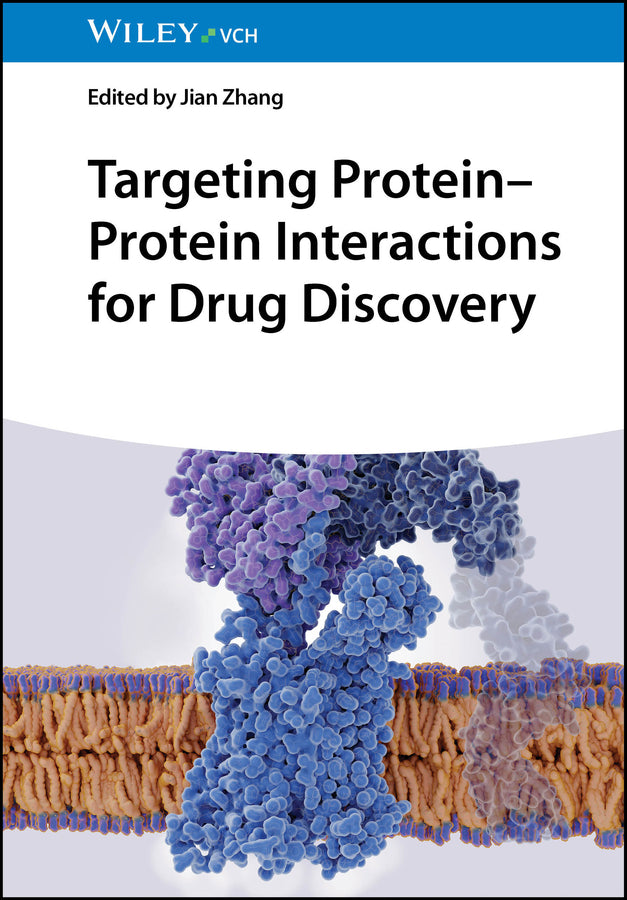
Targeting Protein?Protein Interactions for Drug Discovery provides a systematic and comprehensive overview of protein-protein interactions (PPIs), reviewing foundational concepts, advanced methodologies, and emerging therapeutic strategies, reflecting the multidisciplinary nature of PPI research.
This book discusses computational methods for predicting PPI structures, with a special emphasis on protein docking and deep learning-based approaches, diverse chemical scaffolds for PPI modulation, including foldamers as inhibitors of aberrant PPIs and sulfonyl-¿-AApeptides as novel modulators, and the development and application of stapled peptides as modulators of intracellular PPIs, offering enhanced stability, binding affinity, and cellular permeability.
Readers will also find information on cyclic peptides, focusing on their unique conformational stabilization and therapeutic potential across a range of diseases, small molecule inhibitors targeting BCL-family proteins, revealing their potential in cancer therapy, molecular glues as activators for PPIs, categorized into degraders, stabilizers, and inhibitors based on their biological effects, and the targeting of the APC?Asef interaction for drug discovery in colorectal cancer therapy, offering a case study of specificity and clinical relevance.
Targeting Protein?Protein Interactions for Drug Discovery explores sample topics including:
* Challenges and strategies of drug discovery targeting PPIs, including high-throughput screening and structure-based drug design
* Fluorescence resonance energy transfer (FRET) technology, a powerful tool for real-time analysis of molecular interactions in live cells
* Utility of mass spectrometry (MS) for large-scale mapping of PPI networks with high sensitivity and resolution
* Proximity ligation assays (PLA) for detecting PPIs in situ, emphasizing spatial precision and adaptability for multiplexed detection
* Application of surface plasmon resonance (SPR) for characterizing PPI specificity, affinity, and kinetics
Exploring both classical and novel approaches to PPI characterization and modulation, Targeting Protein?Protein Interactions for Drug
Discovery offers a comprehensive reference for researchers aiming to unlock the therapeutic potential of PPIs along with educators and students engaged in the study of cellular mechanisms, drug discovery, and biotechnology.
Targeting Protein?Protein Interactions for Drug Discovery provides a systematic and comprehensive overview of protein-protein interactions (PPIs), reviewing foundational concepts, advanced methodologies, and emerging therapeutic strategies, reflecting the multidisciplinary nature of PPI research.
This book discusses computational methods for predicting PPI structures, with a special emphasis on protein docking and deep learning-based approaches, diverse chemical scaffolds for PPI modulation, including foldamers as inhibitors of aberrant PPIs and sulfonyl-¿-AApeptides as novel modulators, and the development and application of stapled peptides as modulators of intracellular PPIs, offering enhanced stability, binding affinity, and cellular permeability.
Readers will also find information on cyclic peptides, focusing on their unique conformational stabilization and therapeutic potential across a range of diseases, small molecule inhibitors targeting BCL-family proteins, revealing their potential in cancer therapy, molecular glues as activators for PPIs, categorized into degraders, stabilizers, and inhibitors based on their biological effects, and the targeting of the APC?Asef interaction for drug discovery in colorectal cancer therapy, offering a case study of specificity and clinical relevance.
Targeting Protein?Protein Interactions for Drug Discovery explores sample topics including:
* Challenges and strategies of drug discovery targeting PPIs, including high-throughput screening and structure-based drug design
* Fluorescence resonance energy transfer (FRET) technology, a powerful tool for real-time analysis of molecular interactions in live cells
* Utility of mass spectrometry (MS) for large-scale mapping of PPI networks with high sensitivity and resolution
* Proximity ligation assays (PLA) for detecting PPIs in situ, emphasizing spatial precision and adaptability for multiplexed detection
* Application of surface plasmon resonance (SPR) for characterizing PPI specificity, affinity, and kinetics
Exploring both classical and novel approaches to PPI characterization and modulation, Targeting Protein?Protein Interactions for Drug
Discovery offers a comprehensive reference for researchers aiming to unlock the therapeutic potential of PPIs along with educators and students engaged in the study of cellular mechanisms, drug discovery, and biotechnology.
Autorenportrait
Jian Zhang received a BM degree in Pharmacology in 2002 from Peking University and a PhD in 2007 from Shanghai Institute of Materia Medica, Chinese Academy of Sciences. Then he moved to the University of Michigan to carry out postdoctoral research in Prof. Shaomeng Wang's group. In 2009, he joined Shanghai Jiao Tong University, School of Medicine, where he is a distinguished professor and doctoral supervisor. Currently, he is also the director of the Medicinal Bioinformatics Center. His fields of research include first-in-class drug design and chemical biology mainly pertaining to protein-protein interactions and allostery and their application in drug discovery.
Weitere Angaben
Buch (Hardcover), Englisch, 432 Seiten
Jetzt Liquidations-News abonnieren
Immer die neusten Abverkäufe und Räumungen kennen! (Max. 1 Nachricht / Monat)